
.webp)

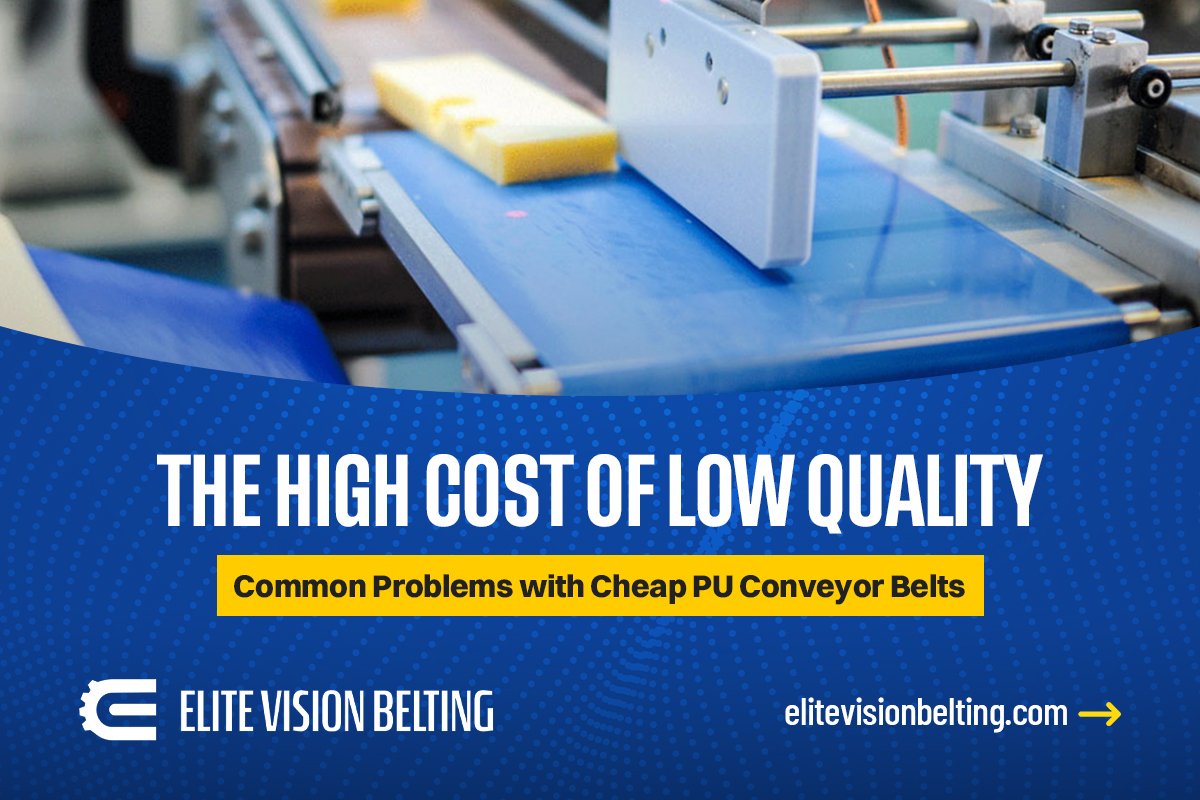
In the world of industrial manufacturing, it is often tempting to cut corners on maintenance costs.
When you are looking at your budget, a "budget-friendly" PU conveyor belt might seem like a smart way to save money.
However, in the belting industry, the old saying "you get what you pay for" couldn't be more accurate.
Polyurethane (PU) belts are prized for their flexibility, hygiene, and durability, especially in sectors like the food and beverage industry.
But when you opt for a low-quality alternative, those benefits quickly vanish, replaced by expensive headaches.
In this blog, we will explore the common problems associated with low-quality PU conveyor belts and why investing in premium quality from Elite Vision Belting is the only way to ensure long-term success.
Rapid Wear and Tear (Short Lifespan)
The most immediate problem with low-quality PU belts is their lack of abrasion resistance. High-grade PU is designed to withstand constant friction and heavy loads.
Cheaper versions often use inferior polymers or "fillers" that cause the top cover to thin out quickly.
When the surface wears down, the internal fabric of the belt becomes exposed. This leads to fraying, which can contaminate your products a nightmare for anyone working in the bakery industry or chocolate industry.
Poor Tracking and Stretching
A high-quality conveyor belt should maintain its tension and "tracking" (running straight on the rollers).
Low-quality PU belts often suffer from poor dimensional stability. This means they stretch unevenly over time.
Once a belt stretches beyond its limit, it starts to slip or "snake" across the conveyor frame.
This constant mistracking causes the edges of the belt to curl or get damaged against the machinery, leading to premature failure and frequent adjustments that eat up your maintenance team’s time.
Chemical and Oil Vulnerability
One of the main reasons industries like the soap and pharma industry or the meat and poultry industry use PU is its resistance to fats, oils, and chemicals.
However, low-grade PU lacks the necessary chemical bonds to resist these substances. Over time, exposure to oils or harsh cleaning agents causes the belt to swell, crack, or become brittle.
A cracked belt is a breeding ground for bacteria, which can lead to failed health inspections and costly product recalls.
Delamination (Peeling Layers)
A conveyor belt is usually made of layers the PU top cover and the fabric carcass. In low-quality belts, the bonding process between these layers is often weak.
This leads to delamination, where the PU surface literally starts to peel away from the fabric.
Delamination is particularly dangerous in the packaging industry, as pieces of the belt can end up inside the packaging, or the loss of grip can cause products to slide off the line, leading to massive waste.
Joint and Splice Failure
The weakest point of any belt is the joint. High-quality PU conveyor belts are designed to be fused perfectly through finger-jointing or overlap welding.
Low-quality belts often have inconsistent thickness or poor-quality base materials, making it nearly impossible to get a strong, smooth splice.
These weak joints often snap under pressure, leading to sudden, unplanned downtime that halts your entire production line.
Excessive Noise and Friction
If your factory floor feels louder than usual, your belts might be the culprit. Low-quality materials often have a higher coefficient of friction against the slider bed. This doesn't just create a noisy work environment.
It also puts extra strain on your motors and gearboxes. Over time, the energy costs of running "sticky," low-quality belts can far exceed the initial savings on the belt itself.
Safety Hazards
A belt that snaps or mistracks isn't just a production problem.
It's a safety hazard. Frayed edges can catch on operator clothing, and sudden belt failures can cause products to fly off the line.
In heavy-duty sectors like the plywood and marble industry, a belt failure can be catastrophic.
Why Choose Quality Over Price?
While the initial price tag of a premium PU belt might be higher, the Total Cost of Ownership (TCO) is significantly lower. When you choose quality, you benefit from:
- Reduced Downtime: Fewer belt changes mean more production hours.
- Energy Savings: Smoother operation reduces the load on your machinery.
- Product Safety: High-grade PU ensures no contamination for food-grade applications.
- Peace of Mind: Knowing your line won't break during a peak shift is priceless.
We specialize in providing high-performance solutions tailored to your specific needs, whether you are in the textiles industry or the bottling industry.
Conclusion
Investing in a low-quality PU conveyor belt is a "false economy." The money you save today will likely be spent tomorrow on repairs, replacements, and lost productivity. Protect your machinery and your bottom line by choosing high-quality, durable belting solutions.
Ready to upgrade your production line? Explore our full range of products or contact our experts today.
