
.webp)
Let’s be honest: after spending years around conveyor systems, you start to realize that most line stoppages, premature wear, and head-splitting maintenance headaches come down to one simple mistake—someone put the wrong belt on the wrong system.
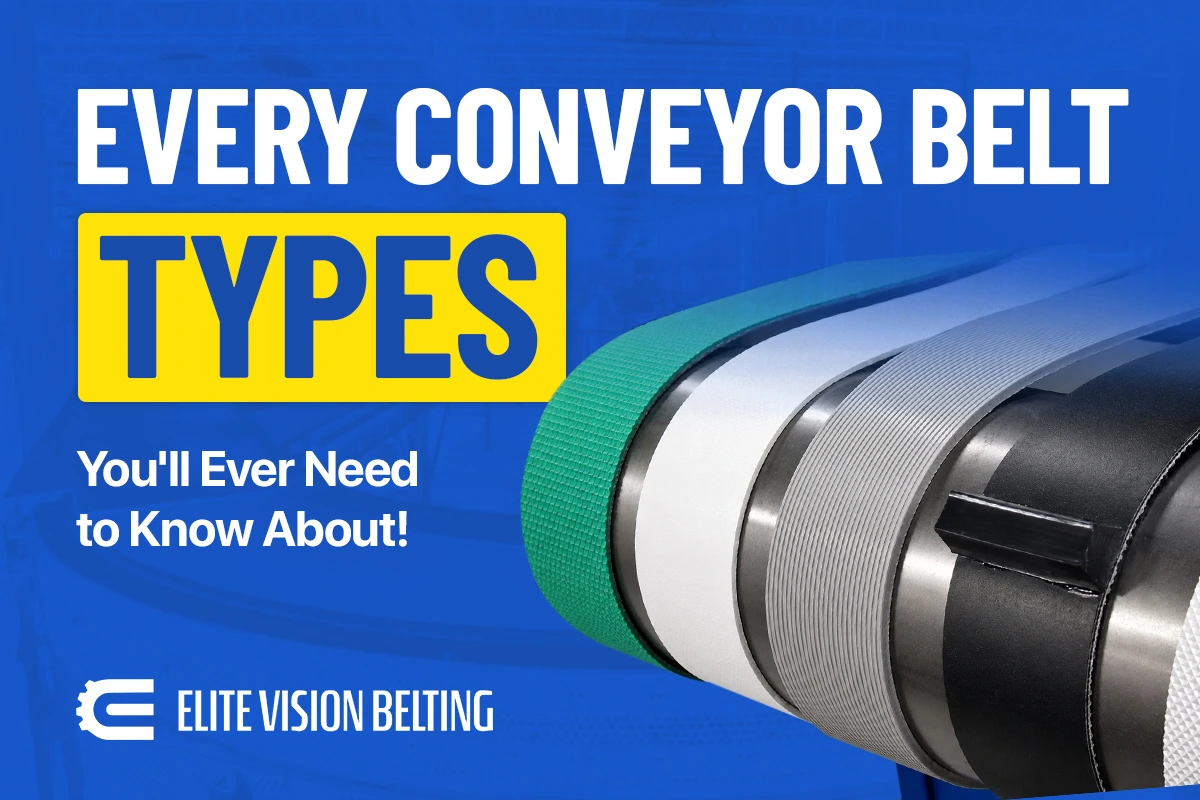
When people ask me how many conveyor belt types exist, I tell them to stop trying to memorize a huge laundry list. Instead, look at your line through three basic lenses: what the belt is made of, how it’s mechanically built, and what special job it’s doing. Once you break it down like that, finding the right fit for your plant becomes second nature.
How to Think About Belt Types (Material vs. Structure vs. Application)
In my experience working with facility managers, the quickest way to ruin your ROI is picking a belt based on price alone rather than operational fit. To keep things simple, break your options down into three clear angles:
- Material composition: This dictates surface survival. Are you dealing with scorching heat, oily foods, sharp edges, or heavy abrasion?
- Structural design: This dictates mechanical movement. Are you pushing heavy pallets, moving fine powders, or draining excess liquids?
- Specialty applications: This covers custom problems. Are you loading out-bound trailers, pulling parts up steep inclines, or holding iron components with magnets?
Material-Based Conveyor Belt Types
The belt material is your first line of defense against continuous physical and environmental abuse.
Fabric and Textile Belts
Fabric options give you wonderful flexibility and cost-effectiveness for light to medium-duty runs.
- Cotton conveyor belt & cotton canvas conveyor belt: In bakery environments, a classic cotton conveyor belt or cotton canvas conveyor belt is still hard to beat. The natural absorption and breathability keep dough from sticking without needing heavy chemical releases.
- Cloth conveyor belt & fabric conveyor belt: For general material handling and packaging, a lightweight cloth conveyor belt or general fabric conveyor belt offers smooth, low-noise performance that keeps your energy draw down.
- Nylon conveyor belt: When you need real stretch resistance and high tensile strength in a textile footprint, a nylon conveyor belt handles heavy mechanical shock loads surprisingly well.
Synthetic Polymer Belts
Synthetic belting is the daily workhorse of modern manufacturing and cleanroom operations.
- PVC conveyor belts: Economical, reliable, and resistant to basic oils and chemicals. Perfect for everyday warehouse and assembly operations.
- PU conveyor belts: If you run a food plant, polyurethane is your best friend. It offers tight cut resistance, doesn't leach, and handles aggressive washdown routines without degrading.
- Rubber conveyor belts: Built for raw abuse. Heavy impact loads, aggregate handling, and tough weather conditions are where thick rubber shines.
Metal and Heat-Resistant Belts
When temperatures spike or loads get absurd, polymers will fail you quickly.
- Steel conveyor belt & steel cord conveyor belt: When running long distances over rough terrain, a heavy steel conveyor belt or steel cord conveyor belt provides zero-stretch, extreme tensile performance for heavy mining and quarrying.
- Teflon conveyor belt: If your product runs through extreme heating tunnels or heat-sealing zones, a teflon conveyor belt provides non-stick release and massive thermal stability without breaking down.
Structure-Based Conveyor Belt Types
How a belt is built mechanically dictates how it handles product geometry, tight turns, and continuous drive loads.
Modular & Plastic Systems
Modular plastic belts use interlocking pieces driven by sprockets. If a worker drops a heavy tool and cracks a section, you just pop out three links instead of replacing a whole two-thousand-dollar belt. It's a lifesaver in bottling and packaging lines.
Mesh and Wire Systems
- Mesh conveyor belt & wire mesh conveyor belt: When you need total airflow or maximum drainage, a open mesh conveyor belt or wire mesh conveyor belt lets heat escape in baking ovens and water drain off in wash stations.
- Stainless steel conveyor belt & metal conveyor belts: In strict sanitary conditions or extreme heat, a stainless steel conveyor belt and general metal conveyor belts deliver long lifespans, zero off-gassing, and effortless sanitization.
Rigid Mechanical Belts
- Slat conveyor belt & slatted conveyor belt: Built like tank tracks, a slat conveyor belt or slatted conveyor belt uses metal or heavy plastic slats to carry hot, sharp, or unusually heavy parts that would shred standard belting in a afternoon.
- Chain conveyor belt: Heavy-duty chain conveyor belt systems are the gold standard for moving loaded pallets, automotive frames, and structural components across plant floors.
Enclosed & Vertical Systems
- Bucket conveyor belt: When you need to move grain, sand, or loose materials straight up into a batching hopper, a bucket conveyor belt carries product vertically without taking up a massive plant footprint.
- Screw conveyor belt: For fine powders, slurries, or damp bulk material, a enclosed screw conveyor belt uses a rotating helical flight to push product along smoothly without dust or spills.
Specialty Conveyor Belt Types
Some problems require unique engineering tweaks right out of the box.
Telescopic Belt Conveyors
If you manage a busy loading dock, a telescopic belt conveyor is a game-changer. It extends directly into trailer beds, cutting manual loading times down drastically and keeping operators off their feet.
Cleated & Sidewall Belts
When pushing product up steep inclines, cleated belts use raised ribs to prevent back-sliding. Add corrugated sidewalls, and you can lift bulk materials at aggressive angles without losing anything over the edges.
Magnetic Belts
Magnetic belts use under-bed magnet tracks to hold ferrous parts firmly in place. They work brilliantly for high-speed indexing, inverted transfers, or taking metal stampings straight up a wall.
Industry Matching Guide
|
Application / Industry |
Ideal Belt Choice |
Practical Field Reason |
|
Baking & Food Processing |
PU, Cotton Canvas, Teflon, Wire Mesh |
Prevents sticking, withstands washdowns, handles ovens |
|
Distribution & Parcel |
Telescopic, PVC, Modular Plastic |
Flexible loading, low maintenance, holds up to high volume |
|
Aggregates & Mining |
Steel Cord, Heavy Rubber, Slat |
Handles extreme impact and continuous high-tonnage strain |
|
Heat Treat & Thermal Drying |
Stainless Steel, Teflon Mesh |
Won't degrade, melt, or off-gas at high temps |
|
Powders & Bulk Solids |
Bucket, Screw, Cleated Sidewall |
Moves loose material vertically without mess or spillage |
Practical Tips for Making Your Choice
Before placing an order, run through this quick checklist to protect your investment
- Look closely at your material: Know the precise weight, sharp edges, moisture level, oil content, and temp of your product.
- Audit your line environment: Account for ambient plant heat, cold storage transitions, chemical washdowns, and humidity levels.
- Map the spatial path: Calculate your incline angles and turn radii. Don't force a rigid belt style through tight curves.
- Check your drive capabilities: Ensure your motors and pulleys can handle the weight and friction demands of your chosen belt material.
Conclusion
- Categorize your search according to the material, mechanical setup, and intended application in order to prevent being inundated by a multitude of options.
- Use neat synthetic materials like PU for food applications and use steel or tough rubber for mining and aggregates operations.
- In the event that you are operating in environments of extreme temperatures, heights, and finely powdered materials, consider using structural setups like mesh, bucket, and screw.
- By working with an experienced belting specialist, you ensure that all of your tracking and splicing requirements are met.
Tired of Dealing with Belt Wear and Line Stoppages?
At Elite Vision Belting, we've spent years solving tough material handling challenges across every major industry. Whether you need custom fabrications, high-heat solutions, or standard replacement belts that won't stretch out on you, we've got your back.
Reach out to our team at Elite Vision Belting today, and let's get your lines running smoothly again!
