
 (2).webp)
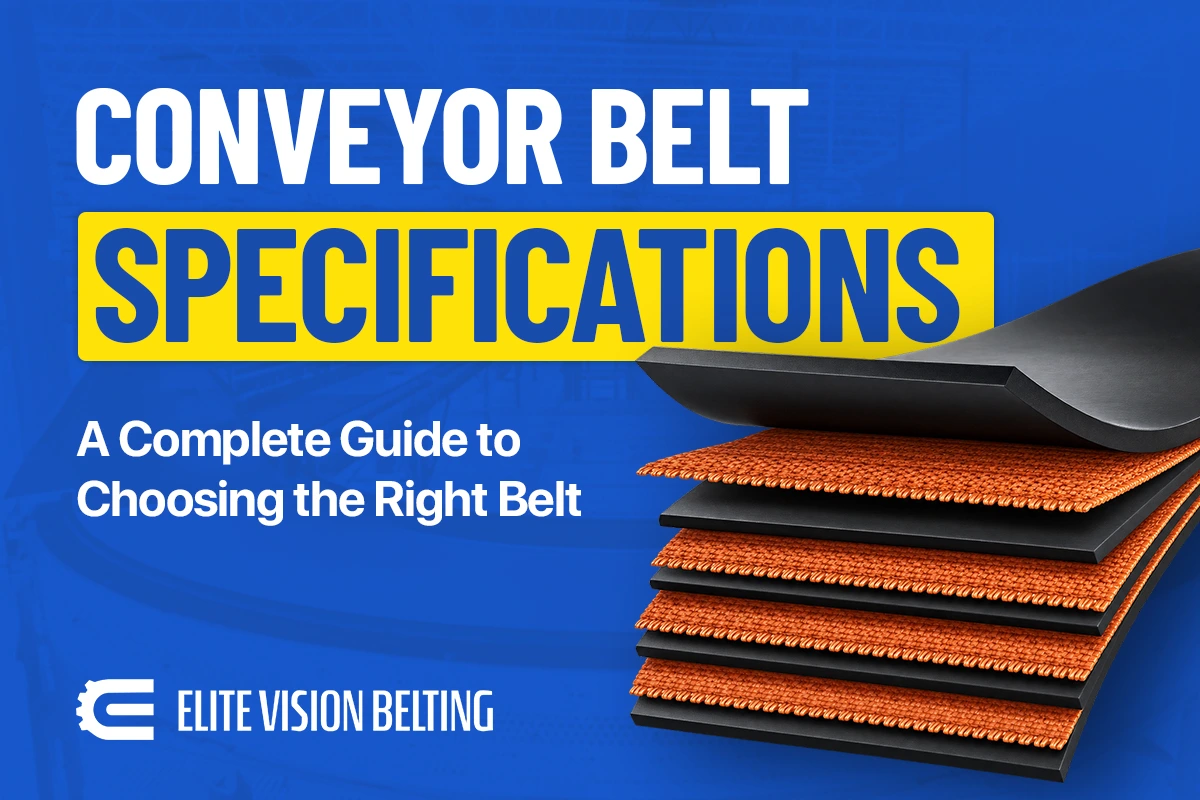
To choose the right conveyor belt, match six specifications to your real working conditions: the material you move, the belt material, the width, the thickness, the load, and the environment the belt runs in. Get those six right and you avoid most of the problems people blame on "a bad belt," like tracking trouble, early wear, and surprise downtime. Get one wrong, even a small one, and it tends to show up months later as a line stoppage.
This guide walks through each specification in plain language, so you can brief a supplier with confidence instead of guessing.
What Do Industrial Conveyor Belt Specifications Include?
Industrial conveyor belt specifications are the set of details that define exactly what belt you need. Most quotes and datasheets cover the same core items:
- Belt material (PVC, PU, rubber or another construction)
- Belt type or surface profile (smooth, rough top, cleated, side wall, modular)
- Width and length
- Overall thickness and number of fabric plies
- Working load and tension rating
- Operating environment (temperature, moisture, oil, hygiene needs)
- Joint or splice method
If a supplier quotes you without asking about most of these, be careful. A belt priced without knowing your application is a guess.
Conveyor Belt Material: PVC, PU or Rubber?
Material is usually the first decision, because it shapes everything else. Here is how the three most common options compare.
PVC conveyor belt. PVC is the all-rounder. It suits light to medium duty work and is used across textile, packaging, tobacco, plywood and general material handling. It is a sensible starting point when your product is not especially abrasive and the conditions are fairly normal. See our PVC conveyor belt range for the options.
PU conveyor belt. PU is the pick when hygiene, flexibility and abrasion resistance matter most. That is why it shows up so often in food processing, packaging and pharma lines. If your product touches the belt directly or the belt gets cleaned often, start your search here. Our PU conveyor belt page covers the range.
Rubber conveyor belt. Rubber earns its place where the load is heavy, rough or abrasive. When you are moving dense or sharp-edged material, or dealing with demanding conditions, a rubber conveyor belt is often the more forgiving choice.
Still undecided between two? Our comparisons of PU vs PVC belts and PVC vs rubber belts go deeper.
Conveyor Belt Types: Match the Surface to the Job
Material is only half the picture. The surface and profile decide how your product actually behaves on the belt. The common conveyor belt types include:
- Flat or smooth belts for general, level transport
- Rough top belts for extra grip on products that slide
- Cleated belts for moving product up an incline without rolling back
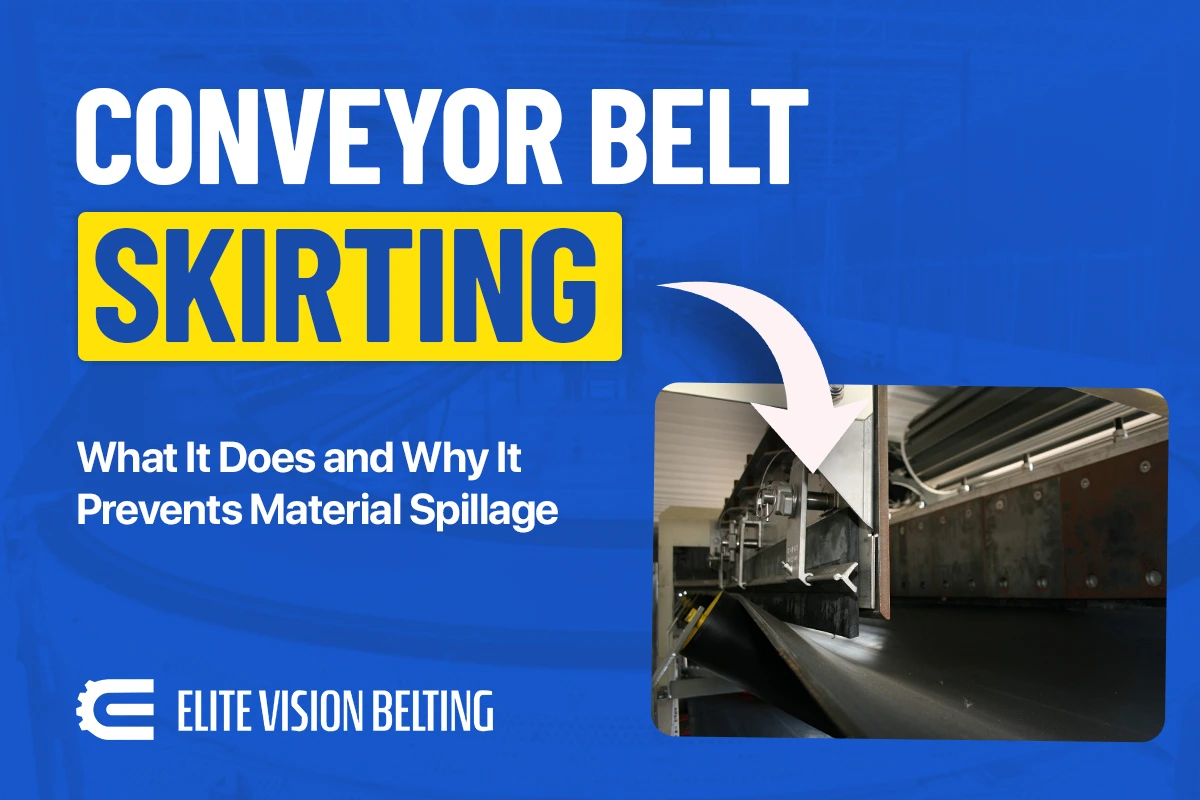
- Side wall belts for loose or bulk material that needs to stay contained
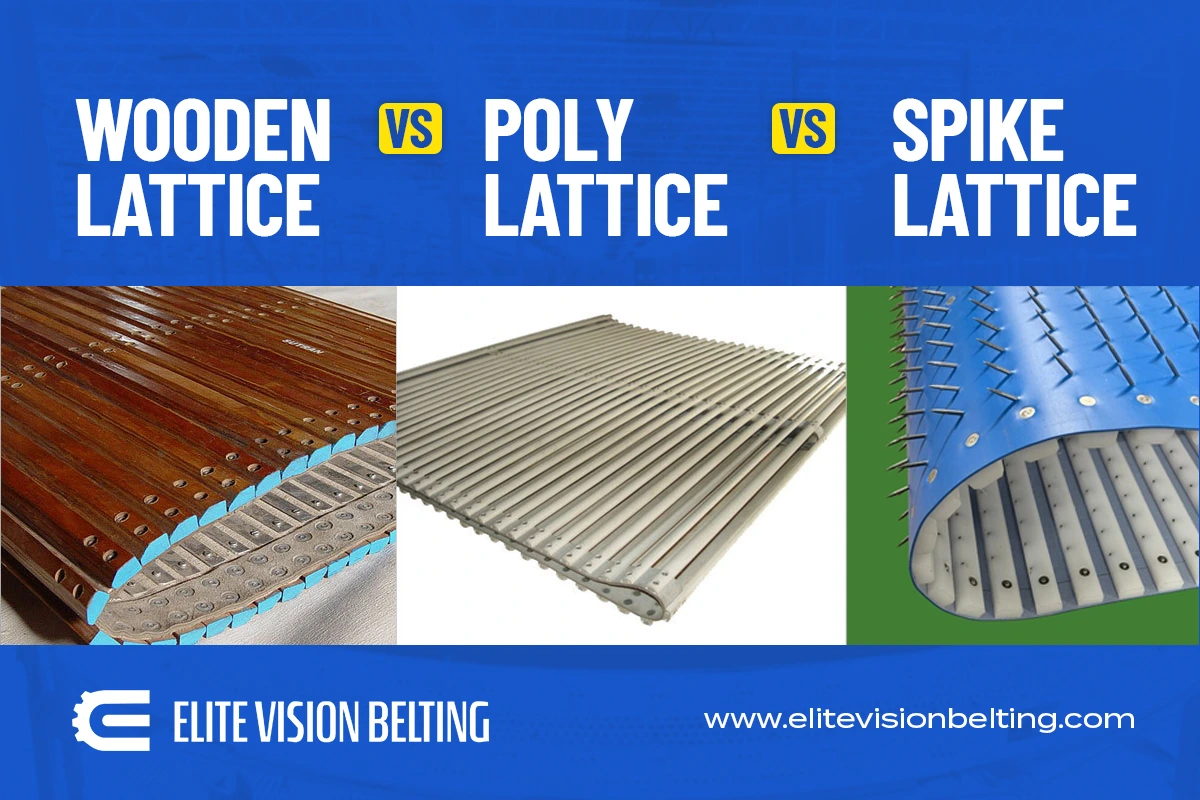
- Modular belts for lines that need easy repair and cleaning
A wrong profile can make a good material perform badly. A smooth belt on a steep incline, for example, will always lose the argument with gravity. For a full breakdown, read our guide to every conveyor belt type.
Conveyor Belt Width and Thickness
Width and thickness are where many buyers rush, and where small mistakes get expensive.
Width. The belt should be wider than the product or material it carries, with enough margin that nothing spills over the edges or rides the edge and wears it down. Width also has to match your pulleys, frame and rollers, so measure the actual system rather than relying on an old belt that may itself have been the wrong size.
Thickness. Thickness affects strength, stiffness and how the belt wraps around pulleys. A thicker belt generally carries more load but is stiffer, and a belt that is too stiff for your pulley diameter will crack, fatigue or lose grip early. That is why you should always ask for the minimum pulley diameter alongside the thickness. The two go together.
For more detail on thickness, see our PVC conveyor belt thickness guide.
Load Capacity and the Heavy Duty Conveyor Belt
Load is not just weight. Three things matter together:
- Weight per meter or per piece, including peaks, not just the average
- How the load lands. A product dropped from height hits very differently from one placed gently.
- Duty cycle. A belt running a few hours a day is not in the same position as one running around the clock.
A heavy duty conveyor belt is usually the right answer when loads are dense, impact is real, or the line never really stops. In those cases, the usual response is a stronger construction and a thicker belt, but remember the pulley point above. Stronger is not automatically better if the belt cannot bend around your drums properly.
If heavy loads are your situation, our article on choosing belt thickness for heavy loads is worth a read.
Operating Conditions That Quietly Decide Belt Life
You can pick the perfect material, width and thickness and still lose the belt to its environment. Check these before you finalize anything:
- Temperature. Hot ovens, curing rooms and cold storage all stress belts differently.
- Moisture and washdown. Wet lines and frequent cleaning need materials that will not absorb or degrade.
- Oil, grease and chemicals. These can break down the wrong material surprisingly fast.
- Hygiene rules. Food and pharma lines need belts that are easy to sanitize. Our guide on food grade vs standard belts explains the difference.
- Static and dust. Textile and tobacco lines often have to manage both.
- Incline and speed. Both change how much grip and support the belt needs.
A Simple Specification Checklist
Before you request a quote, gather these answers:
|
Specification |
What to confirm |
|
Material handled |
What you move, its weight, size, and how abrasive it is |
|
Belt material |
PVC, PU or rubber, based on duty and hygiene needs |
|
Belt type |
Flat, rough top, cleated, side wall or modular |
|
Width and length |
Measured from the actual system, not an old belt |
|
Thickness and plies |
Matched to load and minimum pulley diameter |
|
Operating conditions |
Temperature, moisture, oil, hygiene, static, incline |
|
Joint method |
How the belt will be joined and how often it gets repaired |
Having this on one page makes any supplier conversation faster and more accurate.
When Customized Conveyor Belt Solutions Make Sense
Standard belts work well when your needs are common. But if your product is unusual, your layout is tight, or the conditions are harsh, customized conveyor belt solutions can save you from a long run of small compromises. Custom work can mean a particular width, a specific surface or profile, added cleats or side walls, or a material chosen for your exact process.
The trade-off is lead time and planning, so it pays to decide early. We cover the pros and cons in our article on customized vs standard conveyor belts.
Working With a Conveyor Belt Manufacturer in Ludhiana
Elite Vision Belting is a conveyor belt manufacturer in Ludhiana with more than forty years of experience supplying belts to industries including food and beverage, pharma, packaging, textile, paper, plywood. Our range covers PVC, PU and rubber belts, along with rough top, cleated, modular and side wall options.
If you are not sure which specification fits your line, share your product, load and operating conditions with our team. We will help you narrow it down, and we can talk through customized options if a standard belt is not the right fit. Get in touch for a quote or browse our full product range.
Frequently Asked Questions
What are the most important conveyor belt specifications?
Belt material, width, thickness, load capacity and operating conditions. Belt type and joint method matter too, but those five drive most of the decision.
How do I choose the right conveyor belt width?
Choose a width that clears your product with a safe margin on each side, and make sure it fits your pulleys, rollers and frame. Measure the real system instead of copying an old belt.
Is a thicker conveyor belt always better?
No. Thicker belts usually carry more load, but they are stiffer and need larger pulleys. A belt that is too thick for your drums can fail early, so always check minimum pulley diameter.
Which is better, PVC, PU or rubber?
It depends on the job. PVC suits general light to medium duty, PU suits hygiene-sensitive and abrasion-prone work, and rubber suits heavy or rough materials.
Can I get a conveyor belt made to my own specifications?
Yes. Elite Vision Belting offers customized conveyor belt solutions built around your product, layout and process.
Key Takeaways
- Match six things together: the material handled, belt material, width, thickness, load and operating conditions.
- PVC suits general duty, PU suits hygiene and abrasion, and rubber suits heavy or rough loads.
- Pick a belt wider than your product, and never choose thickness without checking pulley diameter.
- Environment (heat, moisture, oil, hygiene) can shorten belt life even when the spec looks right.
- When a standard belt is a compromise, ask about customized conveyor belt solutions.
