
.webp)
I spent three hours on my knees shovel-loading crushed limestone off a concrete floor at a quarry outside Hamilton back in 2018. It wasn't my job. I was supposed to be looking at a drive motor, but the plant manager was screaming so loud about a blown-out transfer point that everybody in earshot just grabbed a shovel to shut him up.
The culprit? A dried-up, rock-hard strip of skirt rubber conveyor sealing. It had worn down to basically nothing and left this two-inch gap. Raw aggregate was just pouring onto the walkway like a broken faucet.
That afternoon taught me a lesson I won't ever forget. Material spillage isn't just some messy nuisance you can ignore until Friday cleanup. It’s lost product, a massive slip-and-fall hazard, and honestly, a fast track to destroying a very expensive belt.
Here is what you actually need to know about conveyor belt skirting, why the compound you pick matters so much, and how to keep your loading zones from leaking everywhere.
What Belt Skirting Does
At its core, it's just a flexible dam.
When bulk materials—like gravel, coal, or sand—drop from a chute onto a moving belt, they hit hard. They bounce. If you don't contain it, the stuff just spills right over the edges.
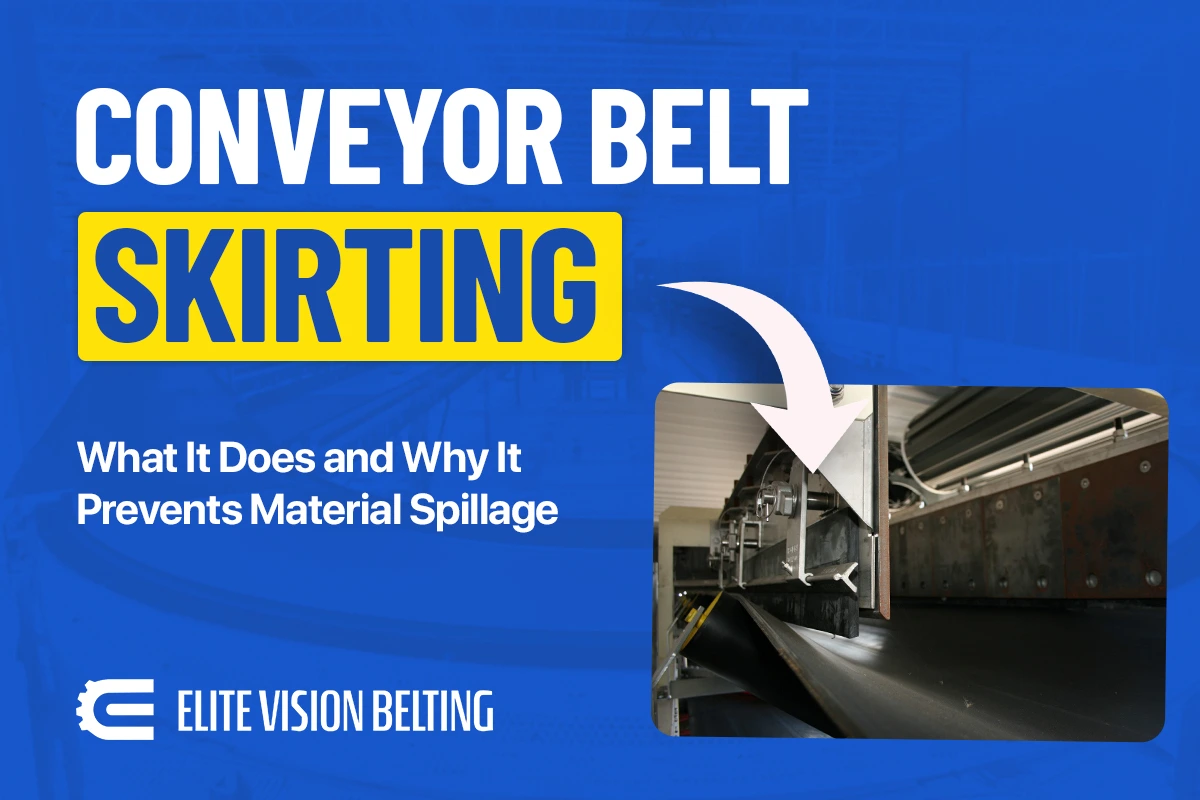
A skirt board conveyor setup uses rigid steel side-walls (the skirt boards) suspended just above the belt surface. But obviously, you can't run bare steel directly against a moving rubber belt without tearing the belt to absolute ribbons. So, you clamp flexible sealing strips to the bottom of the steel structure.
This skirt rubber belt conveyor seal rests lightly on the belt surface. It creates a dynamic barrier holding all that bouncing material in place until it settles down into a stable profile.
People overthink this, but it really just does three things:
- Stops Edge Spillage: Keeps the heavy lumps inside the trough.
- Controls Fugitive Dust: Traps the airborne crap inside the chute zone so your guys aren't breathing it in all day.
- Protects Your Idlers: Stops rocks from falling onto the return idlers, which is exactly what causes belts to mistrack and bearings to blow out prematurely.
Rubber vs Other Skirting Materials
Not all skirting handles friction the same. Picking the wrong compound is stupid—it'll either destroy your sealing strip in a few weeks or eat right through your belt cover.
|
Skirting Material |
Pros |
Cons |
Best Application |
|
Natural Rubber (NR) |
Great elasticity, high tear resistance. Gentle on the belt cover. |
Terrible oil and chemical resistance. Hardens over time. |
General bulk stuff (sand, gravel, crushed rock). |
|
SBR (Styrene-Butadiene) |
Decent abrasion resistance at a lower price point. |
Awful UV and ozone resistance; cracks fast if left outside. |
Indoor conveyor lines or cheap, low-exposure transfers. |
|
EPDM Rubber |
Exceptional resistance to harsh weather, ozone, and baking sun. |
Slightly stiffer than natural rubber. |
Extreme outdoor environments where the sun beats down all day. |
|
Polyurethane (PU) |
Crazy wear life (lasts 3x to 5x longer than rubber). Hard to cut. |
It's a harder material. If you adjust it too tight, it will groove your belt. |
Highly abrasive sharp ore, high-tonnage mining. |
|
Dual-Seal Composite |
Primary block seal takes the hits, secondary outer lip traps the dust. |
Expensive up front. Needs specific clamping systems. |
Fine powder handling, cement plants, high-speed lines. |
My biggest rule of thumb: Never, ever use recycled, old conveyor belting as skirting rubber. I see guys do this all the time to save a buck and it makes my blood boil. Used belting has internal fabric plies that act like literal sandpaper. It will carve permanent grooves right into your main conveyor belt. Just don't do it.
Signs Your Belt Needs Skirting (or an Upgrade)
Walk your line. If you see these red flags, your transfer point containment is garbage:
- Piles of material under the drop: If your guys need shovels or a vac truck under the loading zone every single shift, your seals are leaking.
- Grooves cut into the belt cover: Hardened rubber, trapped rocks, or that improvised belting scrap I just complained about scoring gouges into your cover.
- Dust clouds: Fine dust blowing out around the chute means the seal isn't sitting flat on the belt anymore.
- Wavy wear patterns: If the bottom edge of the skirt rubber looks like an ocean wave, somebody screwed up the clamp tension or the belt is sagging wildly between idlers.
Installation Basics
Even top-tier polyurethane or EPDM will leak if you install it like an amateur. Stick to the basics:
- Support the belt first: Skirting cannot seal a sagging belt. Period. Put impact beds or tight-spaced troughing idlers under the chute so the belt stays flat.
- Check your steel clearance: Keep the rigid steel skirt boards 1 to 2 inches (25mm to 50mm) above the belt. If the steel touches the belt, you're buying a new belt.
- Use light pressure: Lay the rubber seal so it rests lightly against the belt. Don't jam it down.
- Use quick-release clamps: Don't bolt rubber directly through slot holes. Use wedge clamps or quick-releases so you aren't fighting rusted, stripped bolts with a grinder three months from now.
FAQ
How far should skirt rubber extend past the loading point?
Keep the skirt board enclosure going until the material settles down to the same speed as the belt. Usually, that's at least 3 to 6 feet past the drop point depending on how fast you're running.
Can I adjust skirt rubber while the conveyor is running?
No. Never. Tweaking clamps on a moving belt is a great way to lose an arm. Lock out and tag out (LOTO) the system before you stick your hands near the chute.
How tight should skirt rubber be pressed against the belt?
Light, uniform pressure only. Pressing it down hard does not seal better. It just creates a ton of friction, burns up the rubber strip, and wastes your drive motor's power trying to drag the belt through a choke point.
CTA: Stop wasting manpower on constant chute cleanup and start protecting your equipment. Browse Elite Vision Belting's conveyor sealing and accessory range today.
