
.webp)

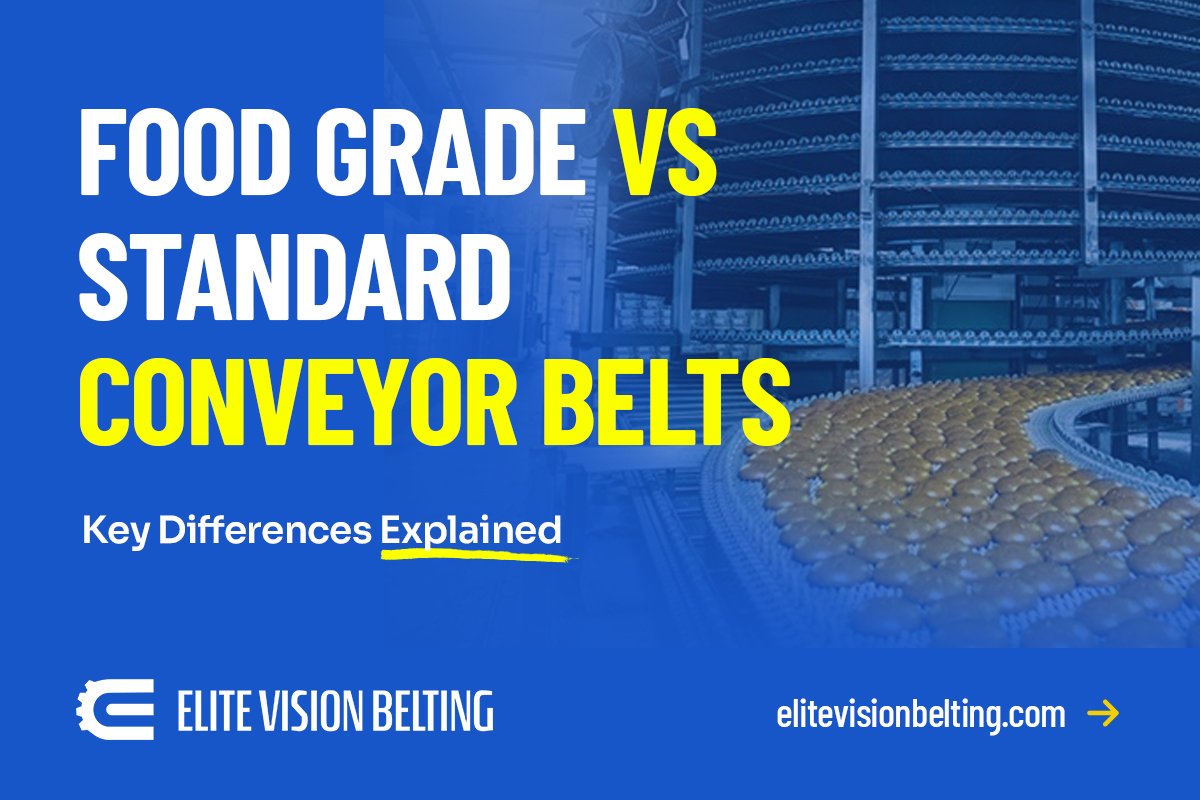
Short answer: food grade conveyor belts are made from materials that are safe for direct food contact, easy to sanitize, and resistant to bacteria buildup. Standard conveyor belts aren't built with any of that in mind. They're made for hauling loads, not handling food, and using one on a food line is how you end up with contamination issues, failed audits, or worse, a recall.
I've seen plant managers try to save a few dollars by sticking with a standard belt "just for now," and it almost always backfires. So let's actually get into what makes these two so different.
The material itself is not the same
Food grade belts are made from things like polyurethane, food safe PVC, or silicone, all of which are non-toxic and approved for contact with food. They're built specifically so nothing leaches into whatever's moving across them.
Standard belts are usually rubber, canvas, or a rougher grade of PVC. They're tough, sure, but they were never tested or meant to touch anything you'd eat.
One is smooth, the other traps everything
This part matters more than people think. Food grade belts have a smooth, sealed surface on purpose. There's nowhere for bacteria, grease, or tiny food particles to hide.
Standard belts tend to have more texture and small gaps in the surface. Great for gripping packages or industrial materials. Terrible for a food environment, because those little crevices turn into bacteria hotspots the longer they go uncleaned.
Washdowns will destroy the wrong belt
Food processing lines get cleaned constantly, often with hot water, steam, and strong sanitizing chemicals. Food grade belts are made to take that kind of punishment without breaking down.
A standard belt won't hold up the same way. Over time it starts cracking, fraying at the edges, or peeling apart, exactly the kind of damage that becomes a bigger contamination risk than the thing you were trying to clean in the first place.
Certification is not optional in this industry
Food grade belts usually come with documentation showing they meet standards like FDA 21 CFR or HACCP guidelines. If you're being audited or supplying larger retailers, this paperwork is often the first thing they ask for.
Standard belts simply don't have this, because they were never built to meet those requirements to begin with.
Yes, food grade costs more upfront
There's no way around it, food grade belts cost more initially because of the materials and certification behind them. But they last longer in demanding, constantly cleaned environments, which usually means fewer replacements and less downtime down the line.
Standard belts look cheaper on paper, but between faster wear and the risk of contamination shutting down your line, that upfront saving disappears fast.
At the end of the day, if what's moving across that belt ends up on someone's plate, it's not the place to cut corners.
Quick recap:
- Food grade belts use certified, food safe materials; standard belts don't
- Smooth surfaces on food grade belts keep bacteria from building up
- Food grade belts are built to survive frequent washdowns and harsh chemicals
- Certification like FDA 21 CFR or HACCP matters for audits and bigger clients
- Higher upfront cost usually pays off through durability and fewer replacements
Need a belt that actually holds up in a food processing environment? Elite Vision Belting manufactures food grade conveyor belts built for real production lines, not just spec sheets. Reach out to our team and we'll help you find the right fit.
