
.webp)
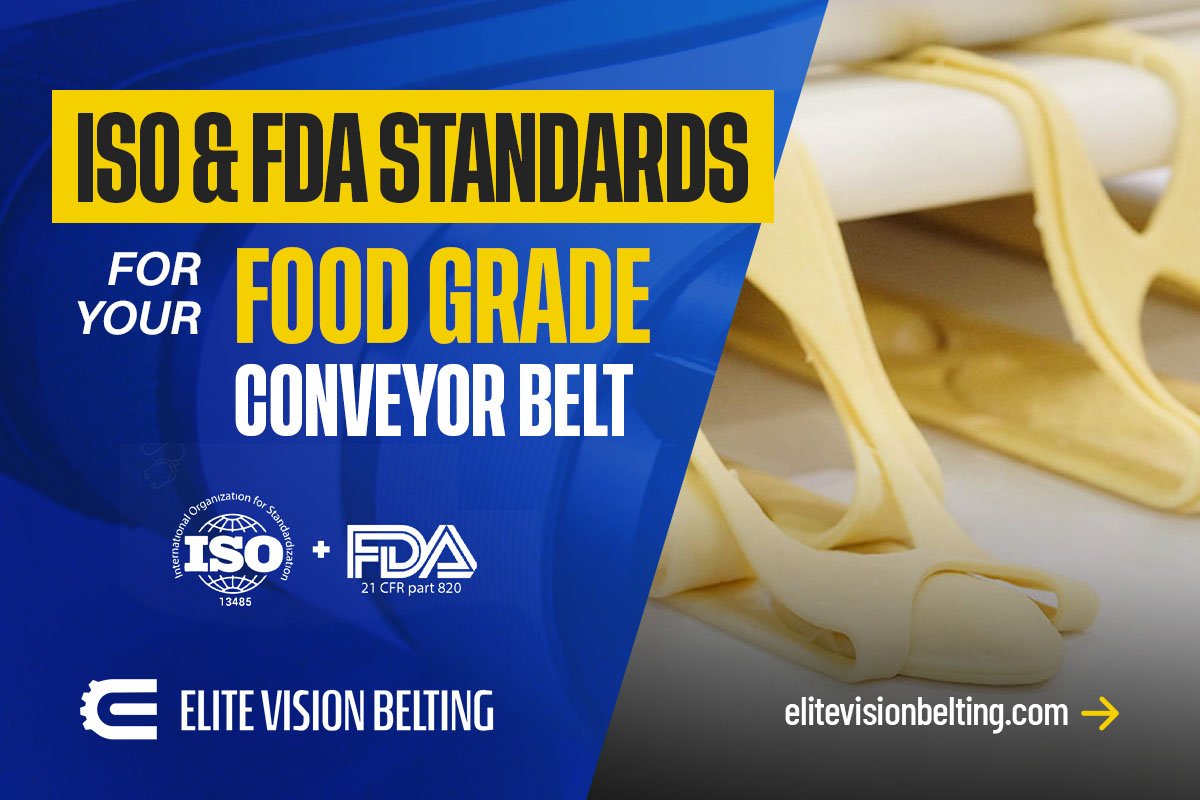
Selecting the right equipment is critical in food production. The machinery must meet the highest safety standards. Your food-grade conveyor belt is a non-negotiable component.
It is a surface that directly contacts your products. Choosing a non-compliant belt carries enormous risks. It can lead to severe product contamination. It endangers consumer health and your brand’s reputation.
This guide details the specific checks every buyer must perform. You need to verify compliance with FDA & ISO standards.
Partnering with a reputable conveyor belt manufacturer is the first step.
Understanding the regulations is the second. We will walk you through the essential requirements. This ensures your next food-grade conveyor belt meets every compliance hurdle.
The FDA Mandate on Material Safety
The U.S. Food and Drug Administration (FDA) governs food-contact materials. Their rules are found in the Code of Federal Regulations (CFR). This code sets the benchmark for safety.
Understanding FDA 21 CFR
Title 21 of the CFR is the core regulation. Specifically, look at Chapter 1, Subchapter B. This section lists substances permitted for food contact. Your conveyor belt manufacturer must adhere to this list.
The most critical regulation is 21 CFR 177.2600. This paragraph details rubber articles intended for repeated use. Rubber components in the belt must satisfy this. A reliable conveyor belt manufacturer provides documentation for this compliance.
Another key regulation is 21 CFR 175.300. This covers resinous and polymeric coatings. These often form the working surface of the food-grade conveyor belt. The materials must be safe for incidental contact.
Migration Limits and Contamination
FDA regulations focus heavily on migration. Migration is the transfer of substances from the belt to the food. This transfer must be non-existent or minimal. Any leachable substance must be safe.
The conveyor belt manufacturer must provide test data. This data proves that chemicals do not migrate. They should demonstrate compliance with overall migration limits (OML). This is a foundational element of safety.
Ask the conveyor belt manufacturer for a Declaration of Compliance (DOC). The DOC is an essential legal document. It is a self-issued certificate. It verifies that the raw materials used are FDA-listed. This document is proof that your food-grade conveyor belt is compliant.
Chemical and Temperature Resistance
Food production involves harsh cleaning cycles. Cleaning requires strong chemicals and high-temperature water. The food-grade conveyor belt must withstand these conditions.
Chemical incompatibility leads to belt degradation. Degradation causes cracking, peeling, and material shedding. These fragments become physical contaminants in your food. Always consult the chemical resistance charts. Your chosen conveyor belt manufacturer provides these crucial details.
High or low process temperatures also matter. Belts used in ovens or freezers require special materials. A suitable food-grade conveyor belt will maintain its integrity.
It must not stiffen, shrink, or crack under temperature extremes. Verify the working temperature range with the conveyor belt manufacturer.
ISO Standards for Quality and Management
ISO standards provide a framework for process excellence. They focus on the system used to create the belt. This gives buyers confidence in the product's consistency.
ISO 22000 and HACCP Integration
ISO 22000 is the international standard for Food Safety Management Systems (FSMS). This certification is highly important. It shows the conveyor belt manufacturer follows a comprehensive safety plan.
ISO 22000 builds upon the Hazard Analysis Critical Control Points (HACCP) system. HACCP is a preventative approach to food safety.
It identifies and manages risks at critical control points. While the belt itself is not HACCP-certified, the conveyor belt manufacturer can be ISO 22000 certified. This ensures the belt is produced under HACCP-compliant practices.
Look for a conveyor belt manufacturer with this certification. It proves their commitment to safety throughout the supply chain.
ISO 9001 for Quality Management
ISO 9001 relates to Quality Management Systems (QMS). It is a measure of quality consistency. A conveyor belt manufacturer with ISO 9001 demonstrates reliable processes.
This means every food-grade conveyor belt is produced to the same standard. It minimizes variations and defects. Quality consistency is paramount for long-term food safety.
Other Relevant Standards: ISO 14890 and EN 620
ISO 14890 specifies requirements for conveyor belt materials. It details the properties of rubber or plastic covers. This includes metrics like tensile strength and wear resistance. These standards ensure the physical durability of the food-grade conveyor belt.
The European Norm EN 620 sets hygiene and safety rules for light conveyors. This standard is highly relevant for belts used in food and pharma.
An experienced conveyor belt manufacturer will cite compliance with both of these standards.
The Hygienic Design and Construction Checklist
Compliance is more than material composition. The physical design of the food-grade conveyor belt system is vital. It must be designed for thorough, easy cleaning.
Frame Material and Finish
The conveyor frame must resist corrosion. Stainless steel is the industry standard. Grade 304 stainless steel offers good corrosion resistance.
However, Grade 316 stainless steel is superior. It is required for high-salt or high-acid applications. The conveyor belt manufacturer should specify which grade they use.
The frame finish should be smooth. Rough surfaces and crevices can harbor bacteria. Continuous welding is always better than stitch welding. Continuous welds eliminate gaps where debris can accumulate.
Belt Construction and Edging
The construction of the food-grade conveyor belt is critical. Homogeneous belts, often made of polyurethane (PU), are favored. They have no plies or fabric layers to harbor pathogens.
Fabric-reinforced belts must have sealed edges. This prevents water and bacteria from entering the inner layers.
If moisture penetrates, the belt becomes a contamination source. A reputable conveyor belt manufacturer ensures robust edge sealing.
Cleats, Sidewalls, and Accessories
All accessories must be compliant. This includes cleats, tracking guides, and sidewalls. These components must also be FDA-approved materials.
They should be molded or welded directly to the food-grade conveyor belt. Avoid belts that use adhesives or mechanical fasteners near food.
These methods can fail, creating hard-to-clean joints. The conveyor belt manufacturer must guarantee the integrity of these joins.
Cleanability and Color
The design must facilitate rapid and effective sanitation. The food-grade conveyor belt should be easily accessible for cleaning. It should allow for fast, complete water drainage.
Color is also a safety feature. Blue is the preferred color for a food-grade conveyor belt. This high-contrast color makes food residue or plastic fragments easy to detect. This improves visual inspection efficacy.
Conclusion
Choosing a food-grade conveyor belt is a huge responsibility. It involves a detailed check of many standards. You must confirm material safety via FDA regulations. You must verify quality systems via ISO certifications. You also need to scrutinize the hygienic design and construction.
Always demand comprehensive documentation from the conveyor belt manufacturer. This includes the Declaration of Compliance and technical specifications. A trustworthy conveyor belt manufacturer will readily provide migration testing reports. They will share chemical compatibility data.
The safest choice is a system designed for cleanability. It must be built with certified materials. The entire structure must minimize contamination risk.
Partnering with an experienced conveyor belt manufacturer is your best strategy. They translate complex regulations into safe, reliable hardware.
This due diligence protects your product, your business, and your customers. Your food-grade conveyor belt must be a guardian of public health.
This detailed review ensures your next food-grade conveyor belt selection is the right one. The process may be complex, but the safety payoff is priceless.
Let your conveyor belt manufacturer be your compliance guide. Choose wisely for a safe and efficient operation.
Upgrade your food-grade conveyor belt with FDA and ISO-certified solutions from Elite Vision Belting. Contact our experts today for complete compliance support.
