
 (2).webp)
.webp)
Solid conveyor belts drive me crazy on drying lines.
Picture this: wet produce or damp cardboard riding along a standard PVC sheet. You blast it with warm air for twenty minutes. What happens? The top side dries out fine, but the bottom sits in a puddle of trapped water. Operators usually try fixing it by cranking the heaters or cutting line speed in half. Result? Thousands wasted in energy on a conveyor that simply can't breathe.
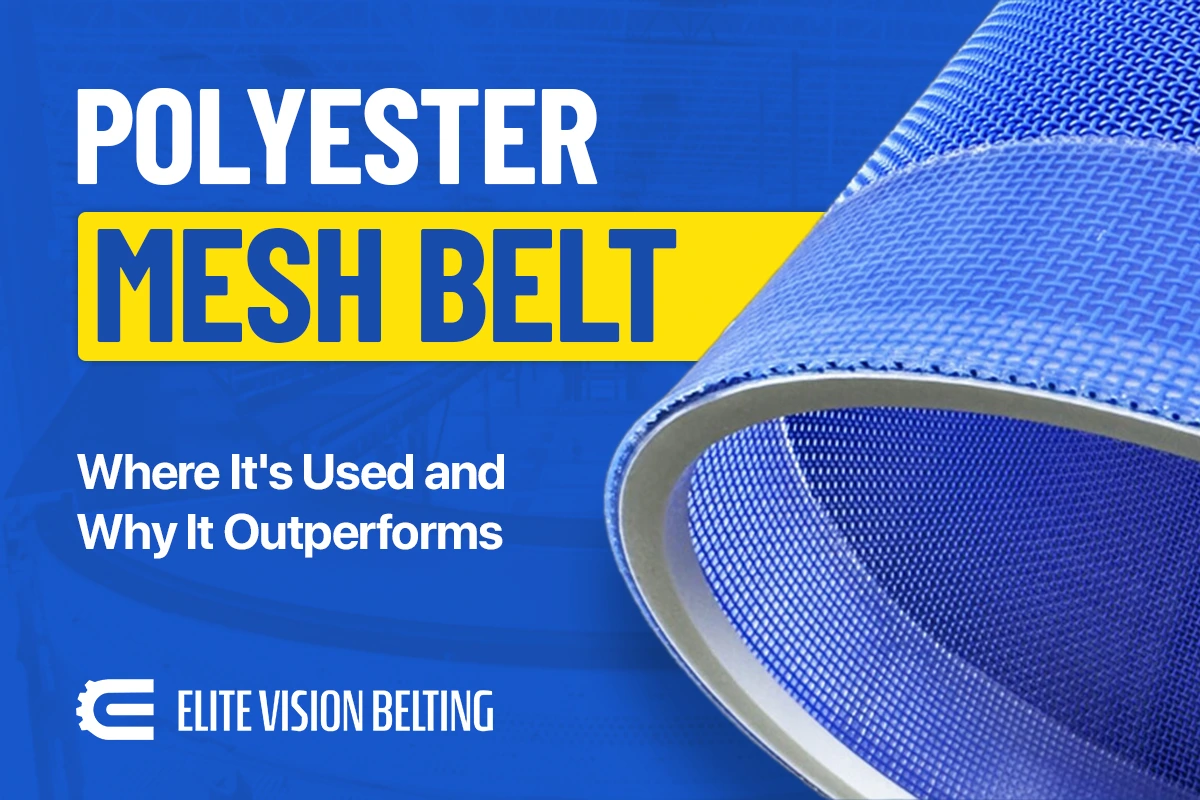
That’s the whole reason polyester mesh belting exists. It fixes the stupidly common airflow and drainage problems solid belts create.
What Makes Mesh Belts Different
It comes down to open space.
Solid belts block everything. Mesh belts don't. They're woven with open apertures—ranging from tiny 100-micron gaps to big 5mm grids depending on what you're running.

(Structure of a synthetic mesh belt. Source: Made-in-China.com)
Here is what actually changes on the floor:
- Air hits every angle: Warm air blows through the product from top and bottom. Drying time drops fast.
- Water drops straight through: No pooling under your materials.
- Less strain on the motor: Synthetic mesh is light. It doesn't drag down drive motors the way heavy rubber or steel does.
- Cleanup takes minutes: Non-stick synthetic fibers don't hold onto gunk or rot from trapped moisture.
Best Use Cases (Drying, Cooling, Washing)
You don't need mesh for basic box transfer. But if your line deals with air, water, or temperature drops, open mesh is usually the only sensible choice.
- Drying Tunnels: Great for non-woven fabrics, printed board, or pulp. Steam vents right out instead of turning back into liquid on the belt.
- Produce Washers: Leafy greens and sliced fruit drop straight out of the rinse tank onto mesh conveyors. Water drains off before packing.
- Cooling Sections: Baked items or molded plastics cool down twice as fast when cold air blows up through the belt.
- Sludge Dewatering: High-strength mesh belts act as filter media in belt presses, squeezing out water without snapping under high tension.
Polyester vs. Steel Mesh
A lot of engineers default to stainless steel wire mesh when they need an open belt. Steel is tough, sure. But it's heavy, expensive, and a pain to track.
- Weight: Polyester is lightweight. Steel is heavy and eats up horsepower.
- Flex Fatigue: Metal wires fatigue and snap over small rollers. Polyester bends continuously without cracking.
- Product Damage: Hard metal scratches soft or painted goods. Polyester won't.
- Cost: Polyester costs a fraction of stainless steel upfront and in replacement parts.
Unless your oven hits temperatures over 180°C (350°F), polyester mesh gives you the exact same open-area benefits as steel without destroying your rollers.
FAQ
Does polyester mesh stretch out over time?
No, assuming you buy quality belting. Industrial mesh is heat-set in manufacturing. That pre-shrinks the fibers so it holds its shape and tracking under normal tension.
How do you connect the ends?
You can get them woven endless, or use Clipper wire hooks, plastic zip joints, or spiral seams if you need to install them on a closed frame.
Will washdown chemicals ruin it?
Polyester handles mild acids and standard solvents easily. If you're running heavy caustic soda washdowns, ask for polypropylene mesh instead.
Fix Your Line's Bottlenecks
Stop wasting energy blowing air at solid belts. Elite Vision Belting makes custom polyester mesh belts built to your exact width, aperture, and temp needs.
Reach out to Elite Vision Belting today to get a quote or talk through specs with a specialist.
