
 (2).webp)
.webp)
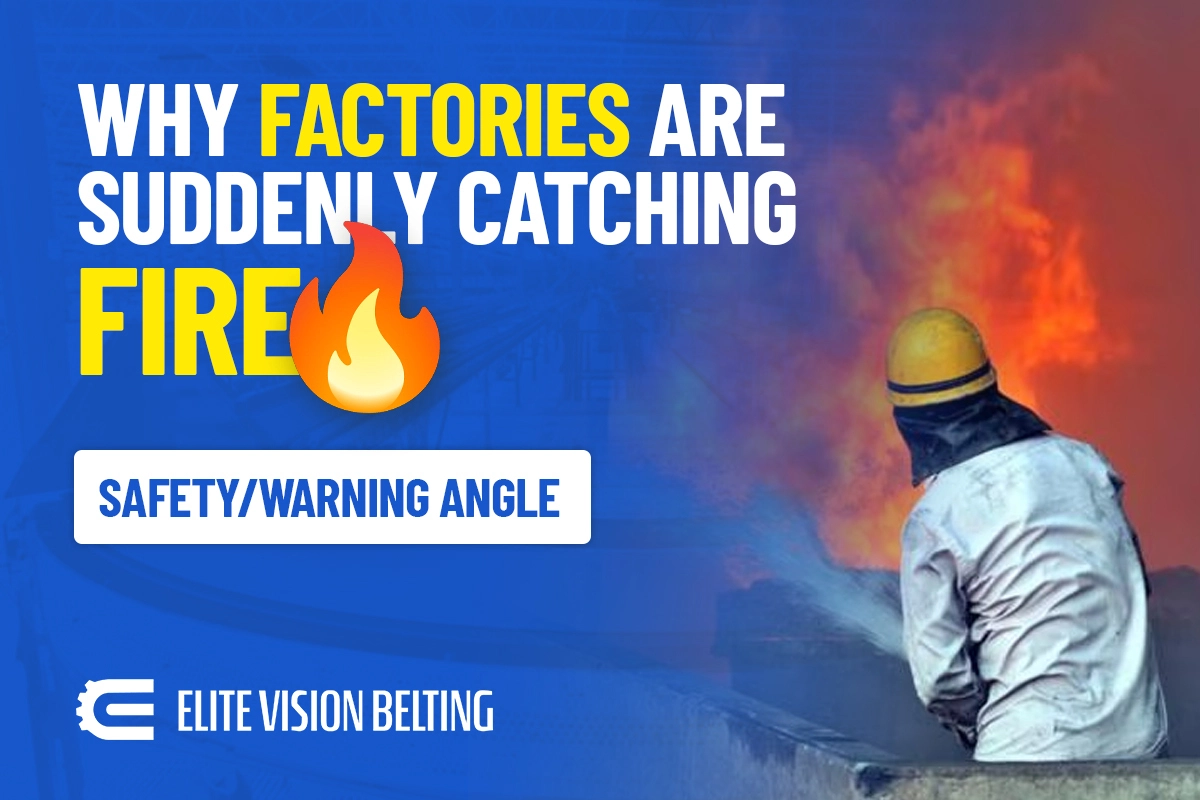
Factories across India are catching fire more often because of one part nobody thinks to check: the conveyor belt. Worn, overheated, or low grade belting is one of the most common ignition sources on a factory floor, and most owners never find out until smoke is already rolling through the plant.
If you run a facility with conveyor systems, this is worth five minutes of your time.
Experts Warn: The Cheap Part Causing Factory Fires Across India
Here's what we're seeing again and again. A factory saves a few thousand rupees by going with a budget belt. That belt runs hotter than it should because the material can't handle the friction or the load. Over months, the heat builds up in the same spots, dust and debris collect on the surface, and eventually you get a spark or a hot patch that ignites.
It's rarely one dramatic failure. It's a slow buildup that nobody's watching.
The belts most at risk are the ones running:
- Continuous high speed operations without proper cooling
- Heavy loads beyond their rated capacity
- In dusty or fibrous environments (textile, paper, wood processing) where debris collects near rollers
- Past their recommended service life without inspection
Nobody Noticed This Until Factories Started Burning
The frustrating part is that belt related fires are almost always preventable. Every one we've reviewed after the fact had warning signs weeks or months before the actual fire. A burning rubber smell that got ignored. A belt that felt warmer than usual near the pulleys. Slight discoloration on the belt surface. Small things that get brushed off because the line is running and nobody wants to stop production to check.
That's the pattern. Not a sudden catastrophic failure, but a slow one that finally tips over.
What Really Caused the Fire — And the Warning Signs Every Owner Ignored
Take a typical case. A mid sized processing plant running a standard PVC belt on a high friction application. The belt was rated for the load on paper, but the operating conditions (heat, continuous run time, dust buildup) pushed it past what it could safely handle.
Warning signs that were present but missed:
- Belt surface temperature rising above normal during shifts
- A faint burning smell reported by two workers over separate weeks
- Visible glazing (a shiny, hardened patch) on the belt where it ran over the drive pulley
- No inspection or replacement schedule in place for over a year
By the time maintenance flagged it, the belt had already overheated to the point of ignition near the pulley. The fix, in hindsight, was simple: switch to a heat resistant, flame retardant belt rated for the actual operating conditions and put a real inspection schedule in place. That's it. But it took a fire to get there.
Myth vs Fact: Belt Quality and Fire Safety
Myth: All conveyor belts are basically the same, so price doesn't matter much. Fact: Belt material, rubber compound, and fire rating vary a lot between manufacturers. A cheaper belt is often cheaper because it skips flame retardant additives or uses lower grade rubber that degrades faster under heat.
Myth: If the belt looks fine, it's fine. Fact: Internal heat damage and glazing often aren't visible until they're advanced. Surface temperature and smell are usually better early indicators than appearance.
Myth: Fire resistant belts are only necessary for "high risk" industries like mining or oil and gas. Fact: Any facility running belts continuously under load, especially in dusty or high friction environments, carries fire risk. Food processing, textiles, wood, and paper plants are common culprits too.
Myth: Inspections are only needed when something seems wrong. Fact: Most fire risks builds up quietly. Scheduled inspections catch problems before there's any visible or noticeable sign.
FAQs
What tells me that my belt can be ignited? Some examples include excessive heat near the pulleys, burning rubber odor, glazing of the belt surfaces, dust that accumulates on the belt and remains uncleanned, and fraying of the belt edges. Also, having a belt that was not intended for the loads and operating conditions that your equipment operates under is a risk factor in itself.
How often should belts be inspected? For most industrial applications, a visual and temperature check should happen weekly, with a full inspection monthly. High heat or high friction operations should be checked more often. If you're not sure what's appropriate for your setup, it's worth getting a professional assessment rather than guessing.
Can any belt be made fire resistant? Not exactly. Fire-retardant qualities result from the construction materials of the belt, thus, it must be incorporated into the design during production. If you operate in an area with high chances of fire, you should use belts that have been tested to be fire-resistant.
Does belt speed affect fire risk? Yes. Higher speeds generate more friction and heat, especially at pulleys and joints. Belts running fast and continuously need more frequent monitoring than slower, intermittent operations.
Get a Free Belt Safety Audit
If you've never had your conveyor belt system properly assessed for fire risk, now's the time. Elite Vision Belting offers a free belt safety audit where we check your current belting against your actual operating conditions, flag any warning signs, and recommend the right fix before it becomes a costly one. Reach out today and let's make sure your factory floor isn't the next headline.
Quick recap:
- Inexpensive or poorly matching belts are one of the most common and easily preventable reasons for fire incidents in factories.
- Warning signs (such as heat, smell, and glazing) appear prior to a fire almost every time.
- Fire hazards are not industry-specific – “high-risk” industries only; it applies to all industries involving continuous operations or high friction.
- Schedule regular inspections (weekly and monthly).
- A free safety audit will help you to understand your vulnerability without guessing.
