
.webp)

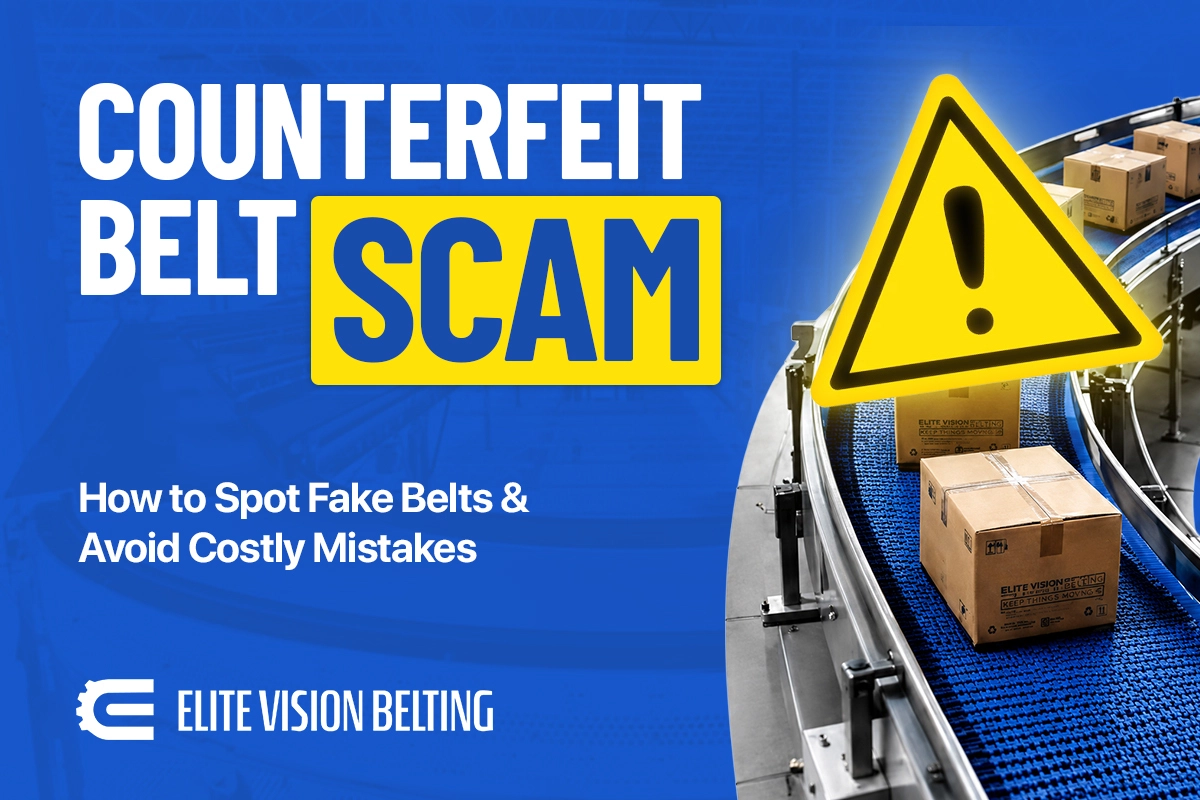
Counterfeit conveyor belts are showing up in factories across the globe disguised as genuine, branded product, sold through the same supply chains buyers have trusted for years, and they're failing early, causing downtime, and in some cases putting workers at risk. This isn't a rare scam pulled off by shady roadside vendors. It's happening through channels that look completely legitimate, which is exactly why so many plant managers don't catch it until a belt fails mid-shift. We've inspected enough failed installations across different markets to know the pattern by now, and it's worth laying out plainly so you can spot it before it costs you.
It Started Like Any Other Day at the Factory
A mid-sized packaging plant ordered a routine batch of replacement belts last year. Same specs they'd ordered for a decade, same supplier name on the invoice, same packaging. Three months in, the belt started delaminating at the splice joint. Then another one. By the time our team got called in to inspect, they'd lost nearly two weeks of production and were staring down a safety incident report because a section had torn while running under load.
What they'd actually received wasn't what they'd paid for. The branding was right. The paperwork looked right. The belt underneath was not.
How This Scam Actually Begins
It rarely starts with an obviously dodgy transaction. Most cases we've seen begin with a legitimate-looking distributor, sometimes even one a factory has worked with before, who at some point starts mixing genuine stock with counterfeit product to cut costs and pad margins. Sometimes it's a middleman further down the chain who repackages inferior belting in boxes and wrapping that mimic a known brand closely enough to pass a quick glance.
The order process looks normal. The invoice looks normal. It's only once the belt is under real load, real heat, real cycles, that the difference becomes impossible to ignore.
Fake Belts Don't Look Fake — That's What Makes This So Dangerous
This is the part that catches experienced buyers off guard. A counterfeit belt isn't a crude imitation you can spot on sight. Modern counterfeiters have gotten good at replicating surface texture, colour, even embossed branding on the belt edge. Visually, side by side with a genuine belt, most people can't tell them apart.
What they can't replicate is what's inside. The core fabric, the ply bonding, the rubber compound ratios, these are where counterfeiters cut corners because that's where the real manufacturing cost sits. A belt can look identical and still have a fraction of the tensile strength or heat resistance of the genuine product. You don't find that out from looking at it. You find out when it fails.
The Real Cost: What the Numbers Say
Counterfeiting isn't a niche problem, it's a massive global one. The OECD and EUIPO put the value of counterfeit and pirated goods in international trade at around USD 467 billion in 2021, and industrial components, machinery parts, and intermediary products like belting fall squarely inside that figure alongside apparel and electronics. Some broader industry estimates put the total worldwide cost of counterfeiting, including displaced sales and enforcement, well into the trillions annually.
For an individual factory, the real cost isn't just the price of the belt itself. It's unplanned downtime, emergency replacement at a premium, damaged product on the line, and in worse cases, injury claims and equipment damage from a belt that failed under load it should have handled easily. A cheap fake belt that lasts four months instead of four years isn't a bargain, it's a recurring expense with a safety risk attached.
5 Warning Signs Your Conveyor Belt Might Be Counterfeit
- Premature edge fraying or delamination well before the expected service life
- Splice joints separating under normal load, not just heavy overload conditions
- Inconsistent thickness across the width of the belt when measured at multiple points
- A noticeably different smell or texture to the rubber compound compared to your last genuine order
- Supplier suddenly unwilling or slow to provide a mill certificate or batch traceability document
The Tricks Suppliers Use to Hide the Switch
The most common trick is batch blending, mixing a small number of counterfeit units into an otherwise genuine order so quality checks on a sample don't catch it. Another is repackaging, where fake belts get shipped in boxes, wrapping and labels that are near-identical to the authentic brand, sometimes even using holographic stickers that look official but don't match the manufacturer's actual verification system.
We've also seen suppliers use genuine-sounding batch numbers that don't correspond to anything traceable when you actually call the manufacturer to check. If a supplier hesitates or gets vague when you ask for verifiable batch documentation, that's worth paying attention to.
Myth vs Fact: "Cheap Belt Doesn't Always Mean Bad Belt" — True or False?
Mostly false, and here's why. Genuine manufacturers do run promotions, clearance stock and volume discounts, so a lower price on its own isn't automatically suspicious. But when a quote comes in significantly below the market rate for that specific spec and brand, with no clear reason like clearance stock or an end-of-line model, that gap has to come from somewhere. In our experience it almost always comes from the materials, not the margin.
A genuinely good deal usually comes with a reason you can verify. An unusually cheap belt with a vague explanation is the pattern worth being cautious about.
Expert Warning: What Every Factory Owner Needs to Know
After years of inspecting failed belts and helping factories troubleshoot unexplained downtime, the pattern we keep coming back to is this, counterfeit belting almost never fails on day one. It fails just late enough that the original invoice, warranty window and supplier goodwill have all expired. That delay is what makes the scam work, and it's exactly why regular inspection matters even when everything looks fine on the surface.
Suspect Your Belt Is Fake? Here's What to Do Right Now
- Stop the line section using that belt if you notice fraying, delamination or splice separation, don't wait for full failure.
- Photograph the belt, especially edges, splice joints and any embossed branding, before doing anything else.
- Check for batch number and mill certificate by your supplier and get the verification from the manufacturer independently.
- Save the original receipt and packing since you would need both in case there is any dispute or claim.
- Inspection needs to be done independently and not merely based on the supplier’s own inspection report.
Genuine vs Counterfeit: How to Tell the Difference
|
Feature |
Genuine Belt |
Counterfeit Belt |
|
Branding |
Sharp, consistent embossing |
Slightly blurred or inconsistent embossing |
|
Batch documentation |
Traceable to manufacturer records |
Vague, missing, or unverifiable |
|
Ply bonding |
Uniform, no visible gaps at edges |
Uneven bonding, early edge separation |
|
Rubber compound |
Consistent smell and texture batch to batch |
Noticeable variation from previous genuine orders |
|
Price |
In line with market rate for the spec |
Significantly below market with no clear reason |
|
Supplier response to verification requests |
Provides documentation readily |
Delays, deflects, or offers excuses |
Can This Scam Be Stopped? What the Industry Needs to Do
Realistically, this gets tackled from both ends. Manufacturers need better batch traceability and verification tools that buyers can actually check independently, not just a sticker that's easy to replicate. And on the buyer side, factories need to build verification into their procurement process as standard practice, not something that only happens after a failure. The suppliers running this scam rely on buyers not checking. Making checking routine is the single biggest thing that shuts it down.
Frequently Asked Questions
How can I verify if my supplier is authorised to sell genuine belting? Contact the manufacturer directly using contact details from their official website, not the ones on your supplier's paperwork, and ask them to confirm the supplier's authorised distributor status along with the batch number on your invoice.
Will a counterfeit belt void my equipment warranty? Often yes. If a counterfeit belt causes damage to rollers, motors or other equipment, manufacturers can and do deny warranty claims once it's established the failure originated from non-genuine components.
Is it worth paying more for a verified genuine belt every time? Given the cost of unplanned downtime, damaged product and potential safety incidents, yes. The price difference between genuine and counterfeit is almost always smaller than the cost of a single unexpected failure.
Quick Recap
- Counterfeit belts often look identical to genuine ones, the failure only shows up under real operating load
- India loses over a lakh crore annually to counterfeit goods across sectors, and industrial belting is part of that
- Watch for premature fraying, splice separation and inconsistent thickness as early warning signs
- Always verify batch numbers and mill certificates directly with the manufacturer, not just the supplier
- A price that's too good to explain is usually the clearest red flag you'll get
Protect Your Factory Today
Not sure if your current belt is the real thing? Book a free belt safety audit with our team and we'll inspect it, check your documentation, and confirm exactly what's running on your line before it becomes a bigger problem
